Gaming Sublimation PNG and T-Shirt PNG: Unlocking High-Resolution Design Potential for Custom Merchandise
In the fast-evolving landscape of digital design and print-on-demand, few resources offer the versatility and polish of a well-prepared Gaming Sublimation PNG file. Whether you are a professional graphic artist, a small business owner launching a apparel line, or a hobbyist exploring custom merchandise, the technical specifications and bundled file formats make a significant difference in both workflow efficiency and final product quality. This article explores the practical value of a T-Shirt PNG design package that includes a 4500×5400 pixel, 300 DPI printable file along with SVG, PDF, and EPS variants, and examines how these assets serve a wide range of creative and commercial applications.
Understanding the Core File Specifications
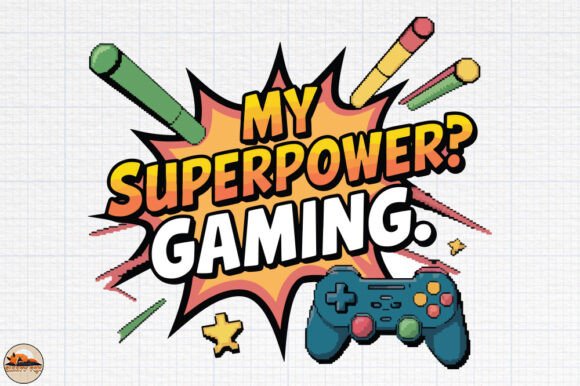
A typical premium design bundle built around a Gaming Sublimation PNG includes a print-ready PNG at 4500×5400 pixels with 300 DPI resolution. These numbers are not arbitrary; they represent industry standards for high-quality fabric printing. At 300 DPI, the image carries enough detail to render crisp text, smooth gradients, and intricate gaming motifs — from pixel-art characters to weapon outlines and esports logos — without visible pixelation when transferred onto fabric or hard surfaces.
The 4500×5400 dimension is particularly well-suited for full-front or full-back t-shirt prints, covering sizes from small to 3XL comfortably. This resolution also allows for cropping, scaling down, or repositioning without losing sharpness. When you work with a T-Shirt PNG prepared at this spec, you avoid the common frustration of upscaling a small graphic only to end up with a blurry or jagged final print.
Why 300 DPI Matters in Sublimation Printing
Dots per inch (DPI) determines how many individual ink dots the printer places per inch of fabric. At 300 DPI, the human eye perceives a continuous, smooth image — ideal for gaming designs that often feature gradients, halos, glow effects, and fine text. Sublimation printing, which transfers dye directly into polyester fibers, relies on high-resolution source files because the process does not allow for post-print sharpening. A Gaming Sublimation PNG with proper DPI ensures that the final product matches the on-screen preview with no loss in clarity.
The Advantage of Multi-Format Bundles
Receiving a single PNG file is helpful, but a complete package containing 1 PNG File, 1 SVG File, 1 PDF File, and 1 EPS File transforms a single-use graphic into a versatile design asset. Each format serves distinct purposes across different software, printing methods, and scaling requirements.
SVG for Scalable Editing
SVG (Scalable Vector Graphics) retains the design as vector paths rather than pixels. For a Gaming Sublimation PNG concept, the SVG component allows you to modify colors, resize infinitely, separate elements, or combine the design with other graphics without losing quality. This is especially useful when adapting a single gaming motif for multiple products — shrinking it for a sticker, enlarging it for a hoodie back print, or recoloring it for a team variant.
PDF for Professional Prepress
PDF is the universal standard for sending designs to commercial printers. A PDF version of your T-Shirt PNG design ensures that fonts, colors, and layers remain intact across different systems. Many print shops request PDFs because they embed color profiles and allow for accurate proofing. By including a PDF in your download, you eliminate back-and-forth file conversion errors.
EPS for Legacy Compatibility
EPS (Encapsulated PostScript) remains widely used in large-format printing and in workflows that rely on older vector editing tools like CorelDraw or Adobe Illustrator CS versions. Having an EPS file guarantees that even studios with legacy software can open and print the design. This format is also commonly used for cutting plotters when you want to turn the design into a vinyl stencil for layered heat transfers.
Practical Applications Across Product Categories
The listed applications — T-shirts, mugs, hoodies, stickers, posters, clothing prints, phone covers, bags, invitations, and more — represent just the starting point. A well-structured Gaming Sublimation PNG bundle opens doors across multiple revenue streams and creative projects.
Apparel: T-Shirts, Hoodies, and Beyond
Apparel is the most obvious use case. With a print-ready T-Shirt PNG, you can produce custom t-shirts for gaming conventions, esports teams, streaming channels, or personal wardrobes. The 4500×5400 size allows you to print a large centerpiece design on the front of a hoodie or a smaller version on the left chest. Because sublimation dyes soak into the fabric, the design feels soft to the touch and does not crack or peel after washing. Gamers and collectors value this durability, especially for frequently worn merchandise.
Hard Goods: Mugs, Phone Covers, and Stickers
Sublimation is not limited to fabric. The same Gaming Sublimation PNG can be transferred onto ceramic mugs, aluminum phone cases, polyester bags, and rigid surfaces like plastic or metal. The 300 DPI resolution ensures that fine details — such as glowing eyes, metallic accents, or small text — remain legible on a curved mug surface. Stickers printed from the PNG or cut from the SVG file can be sold individually or used as promotional giveaways.
Home Decor and Stationery
Posters and wall art benefit from the large PNG dimensions, allowing you to print up to 15×18 inches at full quality. You can also create themed invitations for gaming parties, LAN events, or birthday celebrations. The EPS and SVG files let you resize the design for smaller formats like A5 or A6 without redrawing anything.
For Print-on-Demand Entrepreneurs
If you run a POD store, every minute saved on file preparation translates to faster listing creation and higher profit margins. A T-Shirt PNG that arrives print-ready at 4500×5400 pixels means you can upload it directly to platforms like Printful, Printify, or Redbubble without resizing, repositioning, or adjusting DPI. The included vector files allow you to quickly generate mockups by altering colors or removing backgrounds.
For Graphic Designers and Studios
Designers can use the SVG or EPS file as a base for further customization. You might add a streamer's logo, swap a color palette to match a brand guide, or combine multiple gaming assets into a composite. The vector formats preserve the clean edges needed for professional-grade work. The PDF serves as a perfect proofing document to show clients before production.
For Hobbyists and DIY Crafters
Casual creators often lack access to expensive design software or high-resolution stock art. Receiving a complete file set removes technical barriers. You can open the PNG in free tools like GIMP or Canva, the SVG in Inkscape, the EPS in Gravit Designer, and the PDF in any standard viewer. This inclusivity lowers the entry threshold for producing custom gifts, team shirts, or personal items.
Color Management
Sublimation printing uses CMYK or extended gamut ink sets, while your monitor displays in RGB. The PNG file likely comes in RGB format, which is fine for most sublimation workflows because the printer driver handles conversion. However, for color-critical projects, it is wise to test a small proof print. The PDF format may include an embedded CMYK profile, making it the safest choice for commercial production.
Fabric and Surface Compatibility
Sublimation works best on polyester or polymer-coated surfaces. If you intend to print on 100% cotton t-shirts, sublimation will not bond properly, and the design will fade or wash out. A T-Shirt PNG designed for sublimation can still be used for heat-transfer vinyl or direct-to-film (DTF) printing, which adheres to cotton as well. The scalability of the vector formats helps you adjust the design for these alternative methods.
File Handling and Storage
The 4500×5400 PNG file at 300 DPI is around 15–25 MB, depending on complexity. This is manageable for modern computers, but ensure you store your files on a reliable cloud or external drive. The SVG, PDF, and EPS files are much smaller, typically under 5 MB, making them easy to share with collaborators or send to printers via email.
Real-World Use Cases and Examples
Consider a small esports organization wanting to sell merchandise to its following. With a single Gaming Sublimation PNG bundle, they can print t-shirts for the team, create stickers for fan laptops, produce posters for events, and design phone cases as giveaways. The consistency of using one core design across all products reinforces brand identity. Because the files are print-ready, the organization can order small batches and restock quickly without redesigning.
Another scenario involves a teacher or educator running a game-design club. They can use the T-Shirt PNG for club shirts, the SVG for creating badges and patches, and the PDF for event flyers. The multi-format nature supports both digital and physical outputs from a single purchase.
A third example is a streamer launching a merch line. A 4500×5400 PNG ensures their logo, gaming handle, and any embellishments appear crisp on hoodie backs. The EPS file allows a local print shop to cut stencils for specialty effects like foil or glitter, while the SVG lets the streamer experiment with color variants for different seasons.
Advantages of Print-Ready Resolution in Practice
Many designers underestimate the value of starting at the correct resolution. If you source a Gaming Sublimation PNG that is already 4500×5400 at 300 DPI, you bypass the need to upscale. Upscaling introduces artifacts, softens edges, and can ruin a gradient-heavy gaming design. Similarly, the 4500×5400 aspect ratio (roughly 5:6) is well-proportioned for typical t-shirt print areas — wide enough for horizontal layouts and tall enough for vertical character designs. It also fits standard mug wrap templates with minimal trimming.
The 300 DPI standard is not just a number; it is the threshold above which the human eye perceives continuous tone instead of dots. For gaming designs that often include subtle shading, glow effects, and texture, maintaining 300 DPI is essential to achieving a professional, retail-quality result.
Adaptability Across Design Styles
A T-Shirt PNG created for gaming sublimation can accommodate a wide range of aesthetics — from retro pixel art to hyper-detailed cyberpunk scenes, from minimalist controller outlines to complex battle royale compositions. The resolution supports fine lines and small text, while the vector formats preserve the ability to scale dramatically. A design that looks good on a sticker at 2 inches wide can also fill a hoodie back at 16 inches wide without quality loss when using the SVG or EPS version.
This adaptability makes the file bundle suitable for both mass production and one-off custom orders. Whether you are fulfilling a single order for a friend or printing 500 units for a convention, the same source files serve both scales effectively.
Final Practical Observations
Working with a Gaming Sublimation PNG and its companion file formats eliminates many of the friction points that slow down creative projects. The upfront investment in a properly prepared design pays for itself through saved editing time, reduced print failures, and the ability to serve multiple product categories from a single asset. By understanding the strengths of each format — PNG for immediate printing, SVG for editing, PDF for professional handoff, and EPS for legacy compatibility — you can make informed decisions that streamline your workflow and elevate the quality of your final products.
The combination of high resolution, multi-format delivery, and thoughtful dimensioning transforms a simple graphic into a production-ready tool. For anyone involved in custom merchandise, apparel printing, or digital design, having a reliable T-Shirt PNG bundle at this specification is a practical advantage that supports creativity, efficiency, and consistent results across virtually any sublimation or transfer project.