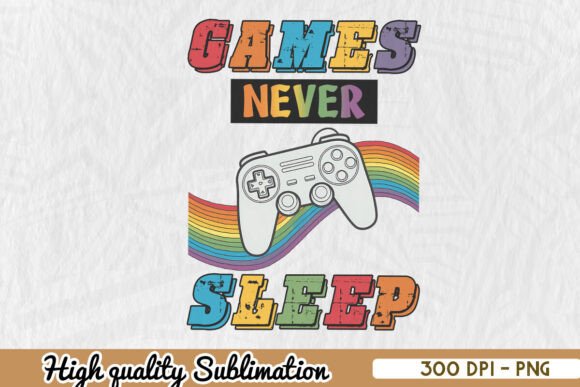
Retro Gaming Controller Vector Set: A Practical Guide for Designers and Creators
Whether you are building a nostalgic brand identity, designing game-themed content, or creating merchandise for a retro gaming community, a well-crafted vector set can save hours of work. The Retro Gaming Controller Vector Set provides a library of scalable assets that fit directly into your creative pipeline. This digital download includes multiple file formats—SVG, PDF, JPEG, PNG Transparent, EPS, and AI—all packaged in one ZIP file. No physical items are shipped, so you can start using the assets within minutes after purchase.
Understanding the Retro Gaming Controller Vector Set
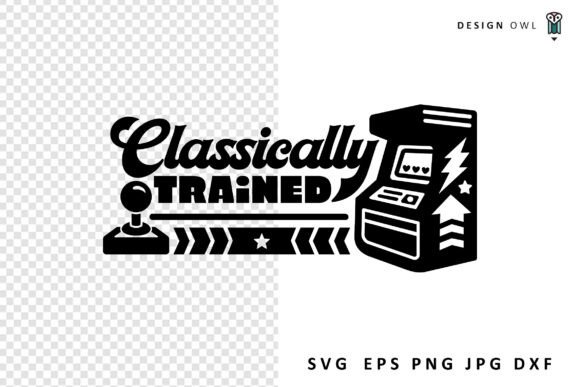
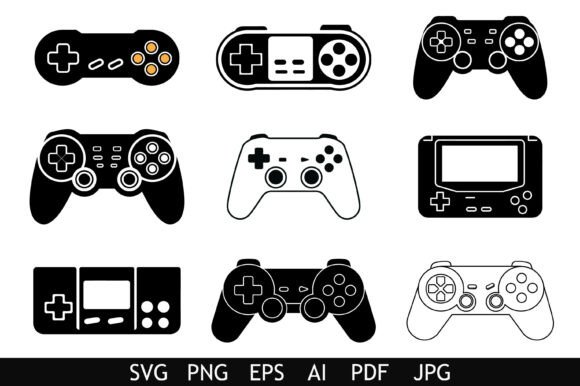
This vector set focuses on classic controller silhouettes, joysticks, and gamepad elements drawn with a vintage aesthetic. Because the files are vector-based, you can scale them to any size without losing quality. The set includes both editable source files (AI, EPS, SVG) and ready-to-use raster versions (JPEG, PNG with transparent backgrounds). This variety means the assets work in nearly every design environment, from Adobe Illustrator and Photoshop to Canva, Figma, or even Microsoft Office.
For planning purposes, it helps to know exactly what you are getting. The ZIP archive contains individual files for each format. You can extract them to a dedicated folder on your local drive or cloud storage. Organizing the files by format or by use case (e.g., “web,” “print,” “editable”) on your first access will speed up retrieval later. The transparent PNGs are ideal for quick placement on existing backgrounds without editing, while the SVG and AI files allow deep customization of colors, strokes, and shapes.
Integrating the Vector Set into Your Creative Workflow
A vector asset set like this fits naturally at different stages of a project. Understanding where it adds the most value helps you integrate it smoothly.
Before the Project: Planning and Asset Preparation
When you start a new design task—whether it is a YouTube thumbnail for a retro game review, a t-shirt print, or a social media campaign—having a reliable vector set in your library reduces time spent searching for or creating assets from scratch. Before you begin layout, open the AI or EPS file in your vector editor. Review the available controller variants and note which ones match the tone of your project. Some sets include multiple angles or styles; this one focuses on classic gamepad and joystick silhouettes. Pick two or three that will serve as base elements, then plan how you will modify them (e.g., recoloring for your brand palette, adding texture, combining with other retro motifs).
You can also create a master template file that imports the vector set as linked assets. If you plan to reuse the controllers across many projects—such as a series of blog posts about classic consoles—link the SVG files rather than embedding them. This keeps your template lightweight and allows you to update all instances by replacing a single source file.
During the Project: On-the-Fly Customization
As your design progresses, the editable formats (AI, EPS, SVG) become your primary tools. Because the set is vector, you can adjust the stroke weight of the controller outlines, change fill colors to match your brand palette, or combine two controllers into a single composed graphic. For example, if you are designing a podcast cover for a retro gaming show, you might take the joystick SVG and layer it behind the podcast title, adjusting opacity and rotation. The PNG transparent version works as a quick overlay if you are working in a raster program that does not support vector directly.
When you need consistency across multiple deliverables—a banner, a sticker, and a social media post—using the same vector source ensures that the controller shape stays identical. No need to redraw or retrace; scaling the SVG produces pixel-perfect results at any resolution. This consistency is especially valuable for small business owners managing brand assets or publishers creating serialized content.
After the Project: Archiving and Repurposing
Once you finish a design, save the final files alongside the original vector set. If you customized the colors or added effects, store those as separate copies in your asset library. This practice helps when you need to produce a sequel or update a piece of content months later. Because the vector set is purchased as a digital download, you have unlimited access to the original files; you never need to worry about pixelation or resolution limits when reusing them in new contexts.
Practical Implementation Tips for Designers and Content Creators
Getting the most out of the Retro Gaming Controller Vector Set requires attention to file organization, software compatibility, and customization techniques.
File Organization from the Start
After downloading the ZIP, extract its contents into a folder with a clear naming convention—for example, “Retro_Controller_Vectors_2025.” Inside, create subfolders: “Editable” (for AI, EPS, SVG), “Raster” (for JPEG, PNG), and “PDF.” If you work with multiple people, store the folder in a shared cloud drive. This structure prevents confusion when collaborators need the transparent PNG for a quick mockup or the SVG for detailed editing.
Software Compatibility and Workflow
- Adobe Illustrator / Inkscape: Open the AI or EPS files for full layer editing. Use SVG for lightweight integration. Customize stroke width, color swatches, and alignment.
- Photoshop / GIMP: Use the PNG transparent files as overlays. For higher scalability, import the SVG as a smart object; it remains editable and resolution-independent.
- Canva / Figma / Sketch: Upload the SVG directly to your design platform. The vector retains its crisp outlines. The transparent PNG works well for drag-and-drop without background cleanup.
- Microsoft Office / Google Docs: Insert the JPEG or PNG for reports and presentations. The PDF version can be used for high-quality print layouts.
Customization for Brand Consistency
Because the set is fully editable in vector form, you can apply a brand color palette in seconds. Open the AI file, select the controller paths, and swap fill colors. For a unified look across multiple projects, create a global swatch library that matches your brand guidelines. If you need a variation—say, a monochrome version for watermarking—duplicate the artboard and remove fills, leaving only strokes. This versatility helps small business owners maintain a consistent visual identity without hiring a designer for each new piece.
Real-World Use Cases and Process Examples
The value of a vector set becomes clear when you see it applied across different mediums. Below are three practical scenarios that illustrate how the Retro Gaming Controller Vector Set integrates into real workflows.
Example 1: Blog Post Feature Image
A blogger writing about the history of arcade joysticks needs a thumbnail that captures the retro feel. They open the AI file, extract the joystick element, and scale it to 1200×630 pixels. They apply a duotone gradient effect using their blog’s accent colors, then export the result as a high-resolution PNG. The entire process takes less than ten minutes. The scalable vector ensures the image looks sharp on retina displays and mobile devices.
Example 2: YouTube Channel Art
A gaming channel wants a consistent banner that combines multiple controllers. The creator imports the SVG versions into a Figma file, arranges them in a circular pattern, and adds a backdrop texture. Because the vectors are editable, they can adjust the spacing and rotation precisely. The final artboard exports as a single PNG. For future channel updates, they just modify the Figma file—no need to re-source assets.
Example 3: Merchandise Design (T-shirt)
A freelancer designing a t-shirt for a retro gaming event starts with the EPS file in Illustrator. They isolate one controller, expand its stroke to create a bold outline, then add a distressed texture overlay. The vector format allows them to scale the design to fit any garment size without loss. They print a test on paper using the PDF version, then submit the final AI file to the manufacturer. The set provides a single source that works across prototyping and production.
Ensuring Consistency and Efficiency Across Projects
Once you have the vector set in your digital toolkit, consistency depends on how you manage and reuse the assets. A common pitfall is to mix different styles of controllers from multiple sources, creating visual noise. This set gives you a unified aesthetic for vintage gamepads. Stick with it across a campaign or series to build visual recognition.
Create a style guide document that references the vector set. Specify default colors (e.g., gray for body, dark gray for buttons), stroke widths, and alignment rules. When you return to the project weeks later, the guide helps you match the look exactly. For long-term use, consider turning the most common controller layout into a reusable symbol in your vector editor—update one symbol and all instances refresh.
Quality control is straightforward with vectors. Always check that your export settings match the intended output: CMYK for print, RGB for screen. Use the transparent PNGs for quick previews, but rely on SVG or AI for final production that requires scaling or editing. The PDF format serves as a reliable fallback for sharing with clients who may not have vector software.
Long-Term Value and Digital Asset Management
A digital download like this offers indefinite reuse. Unlike subscription services, you own the files permanently. Store the original ZIP on at least two separate drives (local and cloud). When you upgrade design software, the SVG and PDF formats ensure backward compatibility. The EPS file works in legacy applications, and the AI file is editable in current versions of Illustrator. This longevity makes the set a practical purchase for hobbyists and professionals alike.
As your project library grows, tag the vector set in your asset management system with relevant keywords: “retro controller,” “gamepad,” “joystick,” “vector,” “vintage gaming.” This indexing saves time when you need to locate the exact shape for a new brief. Small business owners and freelancers who reuse assets across many clients will find the set pays for itself after just a few uses.
Ultimately, the Retro Gaming Controller Vector Set is not just a collection of pretty graphics—it is a tool that fits into a deliberate creative process. From planning and prototyping to final delivery and archiving, the multiple formats and editable nature help you work faster, maintain consistency, and produce professional-looking results without reinventing the wheel. Whether you are a seasoned designer or a content creator looking for reliable visual assets, adding this set to your resource library is a straightforward decision that supports real workflow efficiency.